

Making the correct choices at the right times has always been a key component of fleet management. Every decision has an immediate influence on operational efficiency and expenses, whether it’s selecting the optimal route, keeping an eye on fuel usage, or guaranteeing driver safety.
These days, fleet managers’ decision-making processes are being influenced by artificial intelligence (AI). Businesses may now employ AI-powered insights to analyse data in real time and take quicker action rather than depending solely on manual reports and historical data.
Let’s examine how AI is enhancing fleet management decision-making and why it is becoming crucial for current fleet operations.
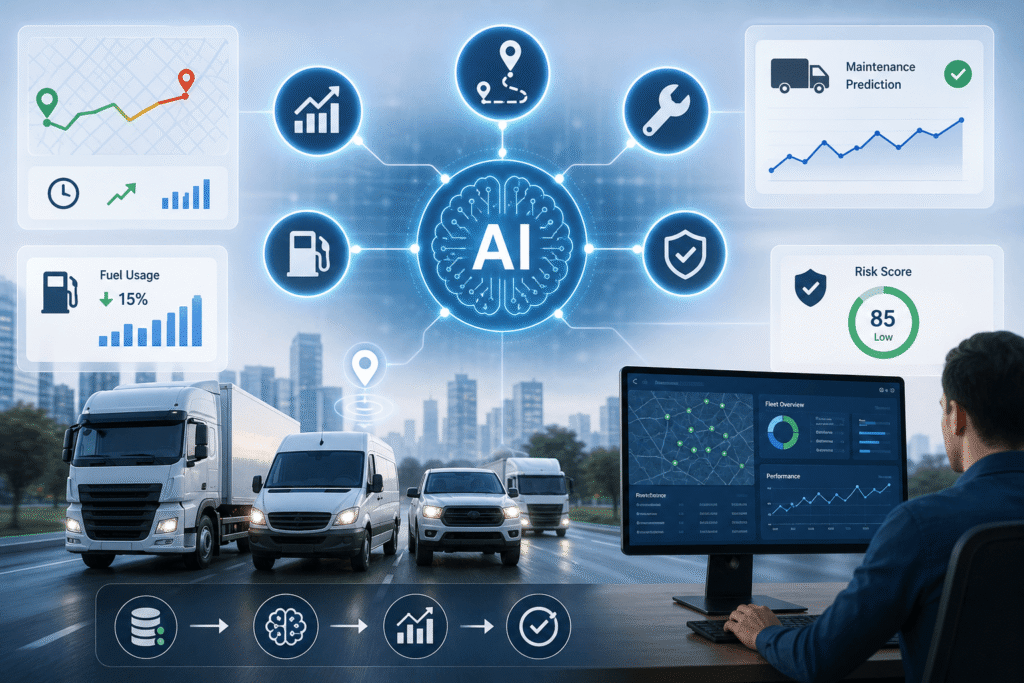
Turning Data into Actionable Insights
Every day, massive volumes of data are produced by fleet operations. Information on speed, routes, idle time, fuel consumption, and driver behaviour are all transmitted by vehicles. In the past, analysing this data manually was time-consuming and often incomplete.
Large datasets may be processed quickly by AI systems, which can also spot patterns that might otherwise go overlooked. AI, for example, can examine fuel consumption trends in multiple vehicles and identify irregularities that can point to fuel theft or careless driving.
This enhances operational control and cost management by enabling fleet managers to switch from reactive to proactive techniques.
Improving Driver Safety and Behavior
Both fleet safety and operating costs are significantly impacted by driver behaviour. Harsh braking, overspeeding, and aggressive driving can increase accident risks and fuel consumption.
AI-powered video telematics and driver monitoring systems are able to identify dangerous behaviours in real time by analysing driving trends. To enhance driver performance, fleet management can then offer focused instruction or alerts.
For example, the system can identify and recommend remedial measures if a driver regularly accelerates violently. This eventually results in fewer traffic accidents and safer driving practices.
Better Fuel Management
One of the biggest costs associated with fleet operations is fuel. Fleet managers can better understand how fuel is used throughout the fleet with the use of AI.
AI can find locations where fuel is being wasted by examining driving habits, idle time, and route efficiency. To enable precise, real-time fuel monitoring, some systems also incorporate fuel sensors.
With this level of visibility, companies can lower wasteful fuel use and enhance overall cost control.
Smarter Route Optimization
A crucial component of fleet management has always been route planning. Delivery delays, higher fuel usage, and vehicle wear and tear can all result from poor route design.
AI-driven systems are able to concurrently analyse delivery schedules, past travel patterns, weather information, and traffic conditions. AI makes real-time recommendations for the most effective routes based on this data.
This results in reduced delays and increased productivity for logistics firms. Vehicles run more smoothly all day long, and drivers spend less time trapped in traffic.
Predictive Maintenance for Better Fleet Health
Unexpected vehicle failures can cause delays and expensive repairs. In past times, manual inspections or set intervals served as the foundation for maintenance routines.
Predictive maintenance is now feasible thanks to AI. AI can detect early warning indicators of mechanical problems like engine abnormalities, brake wear, or battery concerns by examining sensor data from vehicles.
Fleet managers receive alerts before a major issue rather than waiting for a breakdown. This lowers downtime, prolongs the life of the vehicle, and saves money on emergency repairs.
The Future of Fleet Decision-Making
Fleet managers are being empowered by AI, not replaced by it. Managers may make quicker, more intelligent, and more strategic decisions with AI-driven insights.
AI will become significantly more important in streamlining operations, enhancing safety, and cutting expenses as fleet technology develops.
Adopting AI-powered fleet management systems is rapidly turning into a requirement in the modern transportation and logistics sector. It’s no longer a competitive advantage; it’s the requirement of the hour that no one wants to miss. Making the correct choices at the right times has always been a key component of fleet management. Every decision has an immediate influence on operational efficiency and expenses, whether it’s selecting the optimal route, keeping an eye on fuel usage, or guaranteeing driver safety.
These days, fleet managers’ decision-making processes are being influenced by artificial intelligence (AI). Businesses may now employ AI-powered insights to analyse data in real time and take quicker action rather than depending solely on manual reports and historical data.
Let’s examine how AI is enhancing fleet management decision-making and why it is becoming crucial for current fleet operations.
Turning Data into Actionable Insights
Every day, massive volumes of data are produced by fleet operations. Information on speed, routes, idle time, fuel consumption, and driver behaviour are all transmitted by vehicles. In the past, analysing this data manually was time-consuming and often incomplete.
Large datasets may be processed quickly by AI systems, which can also spot patterns that might otherwise go overlooked. AI, for example, can examine fuel consumption trends in multiple vehicles and identify irregularities that can point to fuel theft or careless driving.
This enhances operational control and cost management by enabling fleet managers to switch from reactive to proactive techniques.
Improving Driver Safety and Behavior
Both fleet safety and operating costs are significantly impacted by driver behaviour. Harsh braking, overspeeding, and aggressive driving can increase accident risks and fuel consumption.
AI-powered video telematics and driver monitoring systems are able to identify dangerous behaviours in real time by analysing driving trends. To enhance driver performance, fleet management can then offer focused instruction or alerts.
For example, the system can identify and recommend remedial measures if a driver regularly accelerates violently. This eventually results in fewer traffic accidents and safer driving practices.
Better Fuel Management
One of the biggest costs associated with fleet operations is fuel. Fleet managers can better understand how fuel is used throughout the fleet with the use of AI.
AI can find locations where fuel is being wasted by examining driving habits, idle time, and route efficiency. To enable precise, real-time fuel monitoring, some systems also incorporate fuel sensors.
With this level of visibility, companies can lower wasteful fuel use and enhance overall cost control.
Smarter Route Optimization
A crucial component of fleet management has always been route planning. Delivery delays, higher fuel usage, and vehicle wear and tear can all result from poor route design.
AI-driven systems are able to concurrently analyse delivery schedules, past travel patterns, weather information, and traffic conditions. AI makes real-time recommendations for the most effective routes based on this data.
This results in reduced delays and increased productivity for logistics firms. Vehicles run more smoothly all day long, and drivers spend less time trapped in traffic.
Predictive Maintenance for Better Fleet Health
Unexpected vehicle failures can cause delays and expensive repairs. In past times, manual inspections or set intervals served as the foundation for maintenance routines.
Predictive maintenance is now feasible thanks to AI. AI can detect early warning indicators of mechanical problems like engine abnormalities, brake wear, or battery concerns by examining sensor data from vehicles.
Fleet managers receive alerts before a major issue rather than waiting for a breakdown. This lowers downtime, prolongs the life of the vehicle, and saves money on emergency repairs.
The Future of Fleet Decision-Making
Fleet managers are being empowered by AI, not replaced by it. Managers may make quicker, more intelligent, and more strategic decisions with AI-driven insights.
AI will become significantly more important in streamlining operations, enhancing safety, and cutting expenses as fleet technology develops.
Adopting AI-powered fleet management systems is rapidly turning into a requirement in the modern transportation and logistics sector. It’s no longer a competitive advantage; it’s the requirement of the hour that no one wants to miss.


 fakta om