

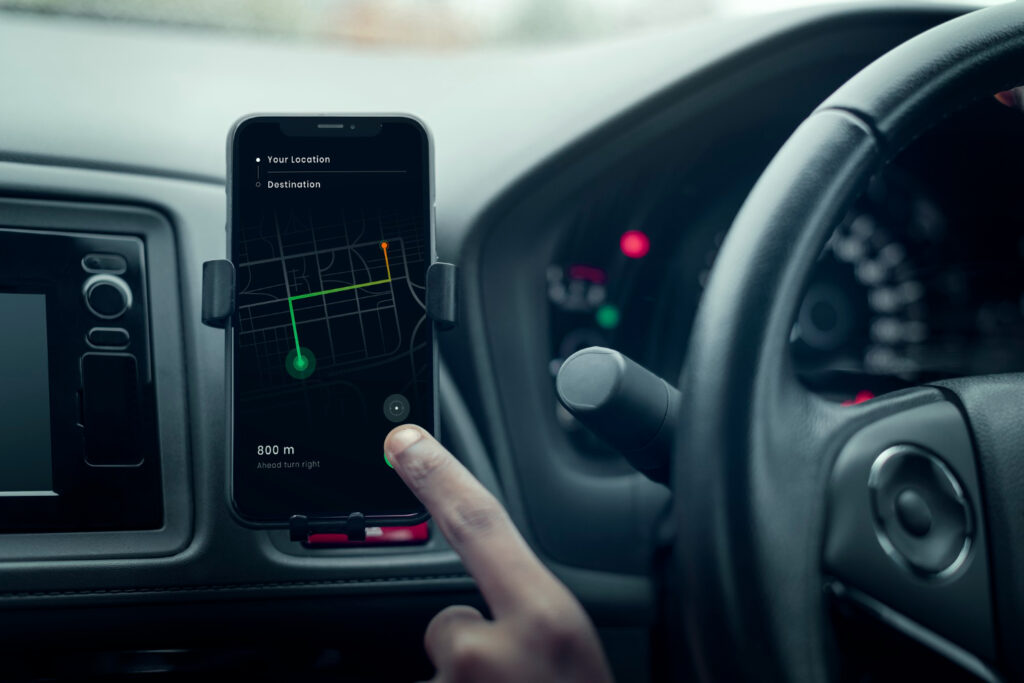

How AI Is Transforming Decision-Making in Fleet Management
Making the correct choices at the right times has always been a key component of fleet management. Every decision has an immediate influence on operational efficiency and expenses, whether it’s selecting the optimal route, keeping an eye on fuel usage, or guaranteeing driver safety.
These days, fleet managers’ decision-making processes are being influenced by artificial intelligence (AI). Businesses may now employ AI-powered insights to analyse data in real time and take quicker action rather than depending solely on manual reports and historical data.
Let’s examine how AI is enhancing fleet management decision-making and why it is becoming crucial for current fleet operations.
Turning Data into Actionable Insights
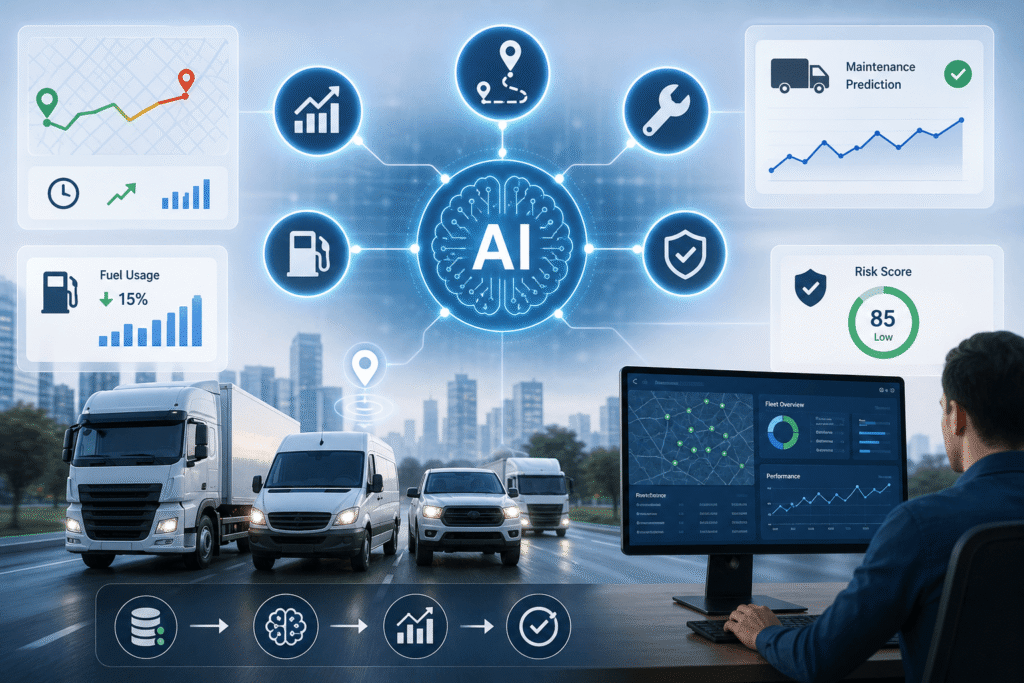
Every day, massive volumes of data are produced by fleet operations. Information on speed, routes, idle time, fuel consumption, and driver behaviour are all transmitted by vehicles. In the past, analysing this data manually was time-consuming and often incomplete.
Large datasets may be processed quickly by AI systems, which can also spot patterns that might otherwise go overlooked. AI, for example, can examine fuel consumption trends in multiple vehicles and identify irregularities that can point to fuel theft or careless driving.
This enhances operational control and cost management by enabling fleet managers to switch from reactive to proactive techniques.
Improving Driver Safety and Behavior
Both fleet safety and operating costs are significantly impacted by driver behaviour. Harsh braking, overspeeding, and aggressive driving can increase accident risks and fuel consumption.
AI-powered video telematics and driver monitoring systems are able to identify dangerous behaviours in real time by analysing driving trends. To enhance driver performance, fleet management can then offer focused instruction or alerts.
For example, the system can identify and recommend remedial measures if a driver regularly accelerates violently. This eventually results in fewer traffic accidents and safer driving practices.
Better Fuel Management
One of the biggest costs associated with fleet operations is fuel. Fleet managers can better understand how fuel is used throughout the fleet with the use of AI.
AI can find locations where fuel is being wasted by examining driving habits, idle time, and route efficiency. To enable precise, real-time fuel monitoring, some systems also incorporate fuel sensors.
With this level of visibility, companies can lower wasteful fuel use and enhance overall cost control.
Smarter Route Optimization
A crucial component of fleet management has always been route planning. Delivery delays, higher fuel usage, and vehicle wear and tear can all result from poor route design.
AI-driven systems are able to concurrently analyse delivery schedules, past travel patterns, weather information, and traffic conditions. AI makes real-time recommendations for the most effective routes based on this data.
This results in reduced delays and increased productivity for logistics firms. Vehicles run more smoothly all day long, and drivers spend less time trapped in traffic.
Predictive Maintenance for Better Fleet Health
Unexpected vehicle failures can cause delays and expensive repairs. In past times, manual inspections or set intervals served as the foundation for maintenance routines.
Predictive maintenance is now feasible thanks to AI. AI can detect early warning indicators of mechanical problems like engine abnormalities, brake wear, or battery concerns by examining sensor data from vehicles.
Fleet managers receive alerts before a major issue rather than waiting for a breakdown. This lowers downtime, prolongs the life of the vehicle, and saves money on emergency repairs.
The Future of Fleet Decision-Making
Fleet managers are being empowered by AI, not replaced by it. Managers may make quicker, more intelligent, and more strategic decisions with AI-driven insights.
AI will become significantly more important in streamlining operations, enhancing safety, and cutting expenses as fleet technology develops.
Adopting AI-powered fleet management systems is rapidly turning into a requirement in the modern transportation and logistics sector. It’s no longer a competitive advantage; it’s the requirement of the hour that no one wants to miss. Making the correct choices at the right times has always been a key component of fleet management. Every decision has an immediate influence on operational efficiency and expenses, whether it’s selecting the optimal route, keeping an eye on fuel usage, or guaranteeing driver safety.
These days, fleet managers’ decision-making processes are being influenced by artificial intelligence (AI). Businesses may now employ AI-powered insights to analyse data in real time and take quicker action rather than depending solely on manual reports and historical data.
Let’s examine how AI is enhancing fleet management decision-making and why it is becoming crucial for current fleet operations.
Turning Data into Actionable Insights
Every day, massive volumes of data are produced by fleet operations. Information on speed, routes, idle time, fuel consumption, and driver behaviour are all transmitted by vehicles. In the past, analysing this data manually was time-consuming and often incomplete.
Large datasets may be processed quickly by AI systems, which can also spot patterns that might otherwise go overlooked. AI, for example, can examine fuel consumption trends in multiple vehicles and identify irregularities that can point to fuel theft or careless driving.
This enhances operational control and cost management by enabling fleet managers to switch from reactive to proactive techniques.
Improving Driver Safety and Behavior
Both fleet safety and operating costs are significantly impacted by driver behaviour. Harsh braking, overspeeding, and aggressive driving can increase accident risks and fuel consumption.
AI-powered video telematics and driver monitoring systems are able to identify dangerous behaviours in real time by analysing driving trends. To enhance driver performance, fleet management can then offer focused instruction or alerts.
For example, the system can identify and recommend remedial measures if a driver regularly accelerates violently. This eventually results in fewer traffic accidents and safer driving practices.
Better Fuel Management
One of the biggest costs associated with fleet operations is fuel. Fleet managers can better understand how fuel is used throughout the fleet with the use of AI.
AI can find locations where fuel is being wasted by examining driving habits, idle time, and route efficiency. To enable precise, real-time fuel monitoring, some systems also incorporate fuel sensors.
With this level of visibility, companies can lower wasteful fuel use and enhance overall cost control.
Smarter Route Optimization
A crucial component of fleet management has always been route planning. Delivery delays, higher fuel usage, and vehicle wear and tear can all result from poor route design.
AI-driven systems are able to concurrently analyse delivery schedules, past travel patterns, weather information, and traffic conditions. AI makes real-time recommendations for the most effective routes based on this data.
This results in reduced delays and increased productivity for logistics firms. Vehicles run more smoothly all day long, and drivers spend less time trapped in traffic.
Predictive Maintenance for Better Fleet Health
Unexpected vehicle failures can cause delays and expensive repairs. In past times, manual inspections or set intervals served as the foundation for maintenance routines.
Predictive maintenance is now feasible thanks to AI. AI can detect early warning indicators of mechanical problems like engine abnormalities, brake wear, or battery concerns by examining sensor data from vehicles.
Fleet managers receive alerts before a major issue rather than waiting for a breakdown. This lowers downtime, prolongs the life of the vehicle, and saves money on emergency repairs.
The Future of Fleet Decision-Making
Fleet managers are being empowered by AI, not replaced by it. Managers may make quicker, more intelligent, and more strategic decisions with AI-driven insights.
AI will become significantly more important in streamlining operations, enhancing safety, and cutting expenses as fleet technology develops.
Adopting AI-powered fleet management systems is rapidly turning into a requirement in the modern transportation and logistics sector. It’s no longer a competitive advantage; it’s the requirement of the hour that no one wants to miss.
What Is Fleet Management Technology and Why Do Businesses Need It in 2026?
In today’s fast-paced logistics and transportation sector, managing a fleet of vehicles involves more than simply assigning drivers and tracking deliveries. Fleet management technology is currently used by businesses to monitor cars, reduce expenses, enhance safety, and make better operational decisions.
For businesses that rely on transportation, whether they run delivery vans, trucks, service vehicles or construction equipment, this technology is increasingly crucial, especially in 2026.
Let’s examine fleet management technology, its operation, and the reasons why companies can no longer afford to ignore it.
What Is Fleet Management Technology?
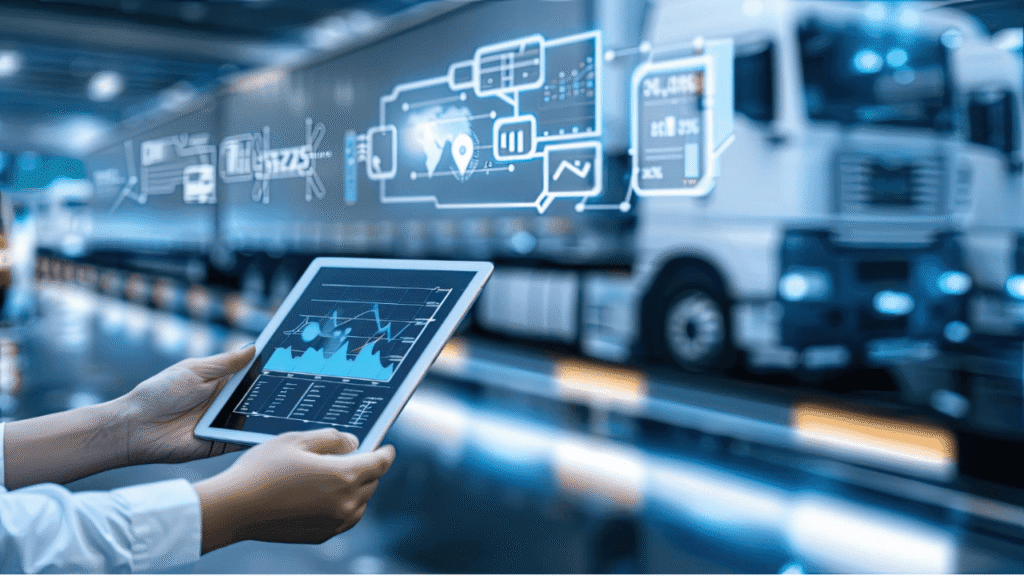
The hardware, software, and communication tools used to track, manage, and improve car fleets are together referred to as fleet management technology. To offer real-time insights about cars and drivers, these systems usually incorporate GPS tracking, telematics, sensors, and cloud-based dashboards.
Companies may now view everything from a single dashboard rather than depending on manual reports or phone conversations with drivers.
- It is useful in:
- Real-time location of vehicles
- Fuel usage
- Driving habits (idling, hard braking, speeding)
- Alerts for vehicle maintenance and health
- Trip history and route optimisation
For example, GPS tracking devices installed in vehicles send location and operational data to a central platform, where managers can analyse the information and improve fleet efficiency.
In simple terms, fleet management technology turns vehicles into connected assets that continuously share data with businesses.
Why Fleet Management Matters More in 2026
Businesses are constantly under pressure to run effectively when transportation costs are increasing and customer demands are higher than ever. Technology for fleet management helps companies in overcoming these obstacles.
Businesses can react swiftly to issues like route delays, reckless driving, or fuel waste with the help of modern tools that provide real-time visibility into fleet operations. Even a small fleet can become disruptive without technology.
Consider a logistics company that operates fifty delivery trucks per day. The business may not find out for hours if a truck gets caught in traffic or takes the incorrect route. With the help of fleet management technology, managers can quickly identify the problem and reroute the driver.
Key Benefits of Fleet Management Technology
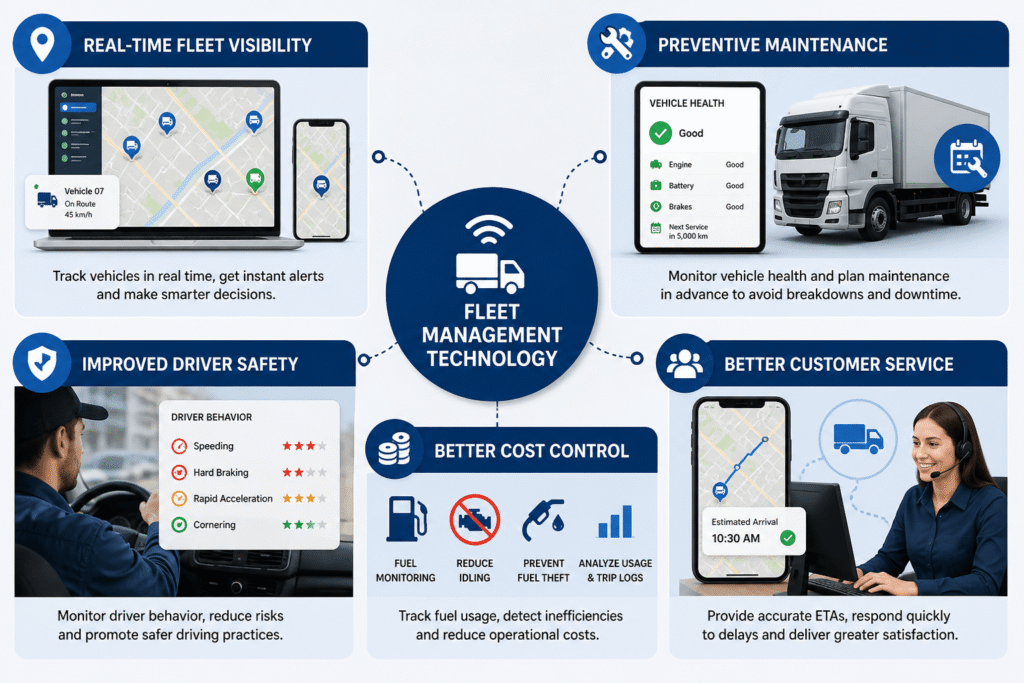
Real-Time Fleet Visibility
Real-time vehicle tracking allows fleet managers to promptly identify delays or route deviations.
Businesses receive automated notifications and dashboards that display the precise location and performance of vehicles, eliminating the need to call drivers for updates on a regular basis.
Decision-making and operational effectiveness are enhanced by this visibility.
Preventive Maintenance
Fleet technology can track mileage, vehicle health, and engine diagnostics to plan maintenance before troubles arise.
Preventive maintenance prolongs the life of vehicles, minimises downtime, and maintains smooth operations.
Improved Driver Safety
Businesses can detect dangerous behaviours, including speeding, hard braking, and aggressive driving, by using driver behaviour monitoring.
With telematics data, they can train drivers and encourage safer driving practices while lowering the number of accidents and vehicle damage.
Better Cost Control
One of the biggest operating expenses for fleets is fuel. Fleet management systems keep an eye on fuel consumption and spot inefficiencies like fuel theft, excessive idling, and unauthorised travel.
Businesses can cut wasteful spending and increase overall cost efficiency by examining trip logs and vehicle usage trends.
Better Customer Service
Businesses can give more precise delivery estimates and react swiftly to delays when they are aware of the precise location of their vehicles.
This will lead to faster deliveries, increased dependability, and greater customer satisfaction along with prompt responses in case of delays.
How Technology Can Transform a Delivery Fleet
Consider a mid-sized logistics company operating 80 delivery vehicles across multiple cities. Before adopting fleet management technology, the company faced several problems:
- High fuel costs
- Frequent delivery delays
- Limited visibility into driver activity
- Unexpected vehicle breakdowns
After implementing a telematics-based fleet management system, the company can see significant improvements within six months:
- Fuel costs reduced by 15–20% through route optimization and idle-time monitoring
- Delivery delays decreased because managers could adjust routes in real time
- Driver safety improved through behavior monitoring and training
- Maintenance became proactive instead of reactive
The result? The company saved thousands of dollars annually while improving operational reliability.
The Future of Fleet Management
Fleet management technology is evolving rapidly. In 2026 and beyond, businesses will increasingly adopt:
- AI-powered analytics for predictive maintenance
- Video telematics for driver safety monitoring
- Fuel sensors and IoT devices for accurate fuel tracking
- Automated reporting and compliance tools
These innovations will make fleets smarter, safer, and more efficient than ever before.


